Sunday, June 12, 2016

Summer is an excellent time to consider installing a new fan. A fan creates a breeze that can make the room feel up to 4 degrees cooler. During the warm months, you can keep energy costs down by using the fan instead of air conditioning. In the winter, reversing the direction the blades run can push warm air from the ceiling back down into the room.


What should you look for in a fan? You'll get the most air movement from a fan with greater blade pitch. The more the blade tilts, the more air it will move. We recommend a pitch of at least 12 degrees.

Consider the size of your room. Fans should have at least an 18" clearance between the ends of the blades and the nearest vertical surface for proper air movement. Generally, this is more of an issue in a hallway, but fans are available as small as 15-30" wide. On the other hand, if your room is huge, consider either a very wide fan or two average size fans. Average sized rooms are best with 52" or 60" fans, but you can get larger fans as wide as 96"!

Kichler Bellamy


Another crucial measurement is your ceiling height. Blades should always be mounted at least 7' above the floor for safety. If you have high ceilings, you can get longer downrods in increments from 12-72". A fan that starts 8-9' above the floor gives the best air movement as well as providing the most useful light, if you choose a fan with a light.


There's a fan design for everyone. You can find contemporary, traditional, ornate, clean-lined, and kids fans.


Monte Carlo  Great Lodge Fan

Come in and ask about our selection of fans! We're happy to help you find the style and features most suited to your home. From June 1 to August 31, all of our regular-priced fans are 25% off!

Sunday, May 8, 2016

Bring the Indoors Outside!

One of the big trends for 2016 is bringing elements of the outdoors inside, but did you know you can bring your indoors outside? You do need to be sure that the lighting items you use are wet rated, but there are probably more options than you realized!

Kichler Halleron, cluster of three pendants

Typically, outdoor fixtures are wall lanterns, hanging lanterns, flush mounts, or post tops. With the incorporation of LED, there are an increasing number of contemporary fixtures available that are either slimmer or provide lighting without a visible bulb.
Kichler Magnolia
Kichler Estella
Quoizel Zephyr
If you enjoy grilling or sitting outdoors, consider an outdoor chandelier! You can find several types of chandeliers with varying styles and numbers of bulbs.
Hinkley Holden

Kichler Alameda

Kichler Ashland Bay

If you'd like to spend more time outdoors, but it's just too hot, try an outdoor fan. You'll find a variety of styles and sizes, from 15" wide to 60+" wide!
Kichler Harbor Walk

Kichler Terna

Kichler Szeplo

If you don't have an overhang, you can even use outdoor portable lamps. Some are available  for plug-in and some work with solar power.
Kenroy Hatteras

Kenroy Biscayne
Kenroy Weaver

Summer is near and now is an excellent time to plan out your outdoor space. Come in and let our lighting specialists help you with your project today!


Sunday, April 10, 2016

Happy Earth Day!

This month we celebrate Earth Day on April 22. Earth Day was first celebrated in the United States in 1970 and has since spread to countries all over the world. The event is organized by earthday.org.

In honor of Earth Day, this month's blog post is dedicated to LED. By now, you've probably heard about how efficient and long-lasting LED is. You can buy fixtures with built-in LED, but it's also very easy to swap out bulbs in fixtures where you currently use incandescent or fluorescent bulbs.

 For lamps and chandeliers, there are several types of replacement bulbs available. They vary in design and color (from 2200K, very warm light, to 5000K, very cool light). As long as the socket type matches and the bulb fits in the fixture properly, LED can be substituted anywhere. (Note: some brighter bulbs, such as the 100W replacement, can be larger than the bulb they are replacing and may hang out of the fixture or press up against the glass.)
 

The selection of replacement bulbs is always expanding. You can get retrofit bulbs for recessed lights, fixtures that take small halogen bulbs, and even some fluorescent tubes.
   

For fixtures with exposed bulbs, you can even get filament LED bulbs that have a very similar look and weight to standard incandescent bulbs. These bulbs use 90% less energy and last an average of 23 years!
  

Several LED bulbs can also be dimmed. Stop in to our store and find out how we can help you upgrade to LED!

Sunday, March 13, 2016

2016 Trend Watch

Two words can sum up the the trends we are seeing for 2016: tranquil and spa-like. Homes are increasingly becoming a refuge from the chaos and stress of the world.
PANTONE COLOR OF THE YEAR 2016 - Rose Quartz 13-1520 & Serenity 15-3919

Pantone's Color of The Year is, for the first time, actually two colors: Rose Quartz and Serenity. Below, you can see several suggested color pallettes incorporating both colors. (Click on the photo to visit the original page.)

Color of the Year 2016 - Color Pairings and Pallettes
Other trends for 2016 include geometric shapes, elements of nature, and mixing of textures.

Bathrooms frequently feature chandeliers, often crystal or art glass as seen here. Flush mount crystal fixtures are available for those with lower ceilings.
CKUT1921_PCSP2823C_scene
Spring is here! Now is the perfect time to revitalize your lighting and home decor!

Sunday, February 14, 2016

Undercabinet Lighting!

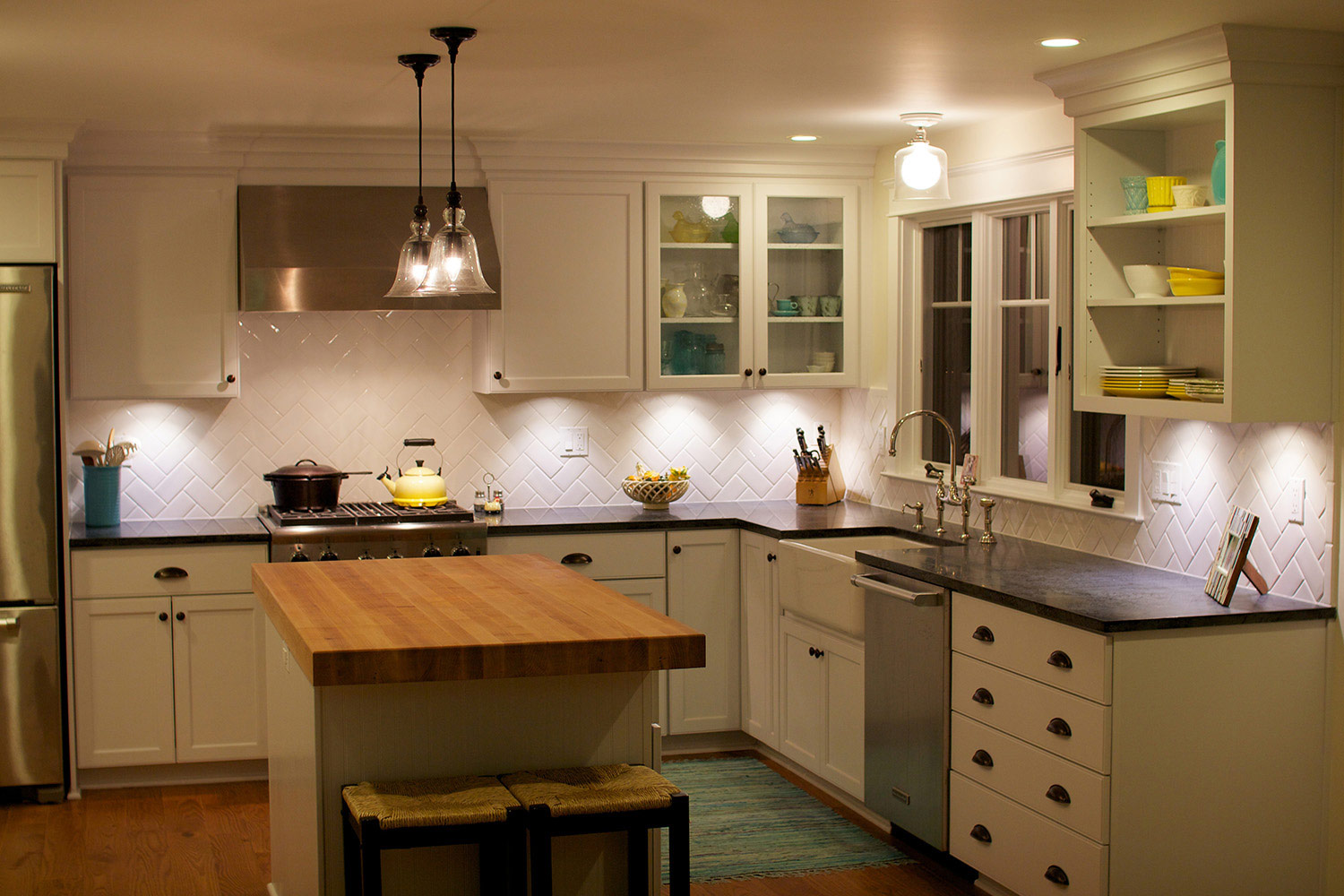
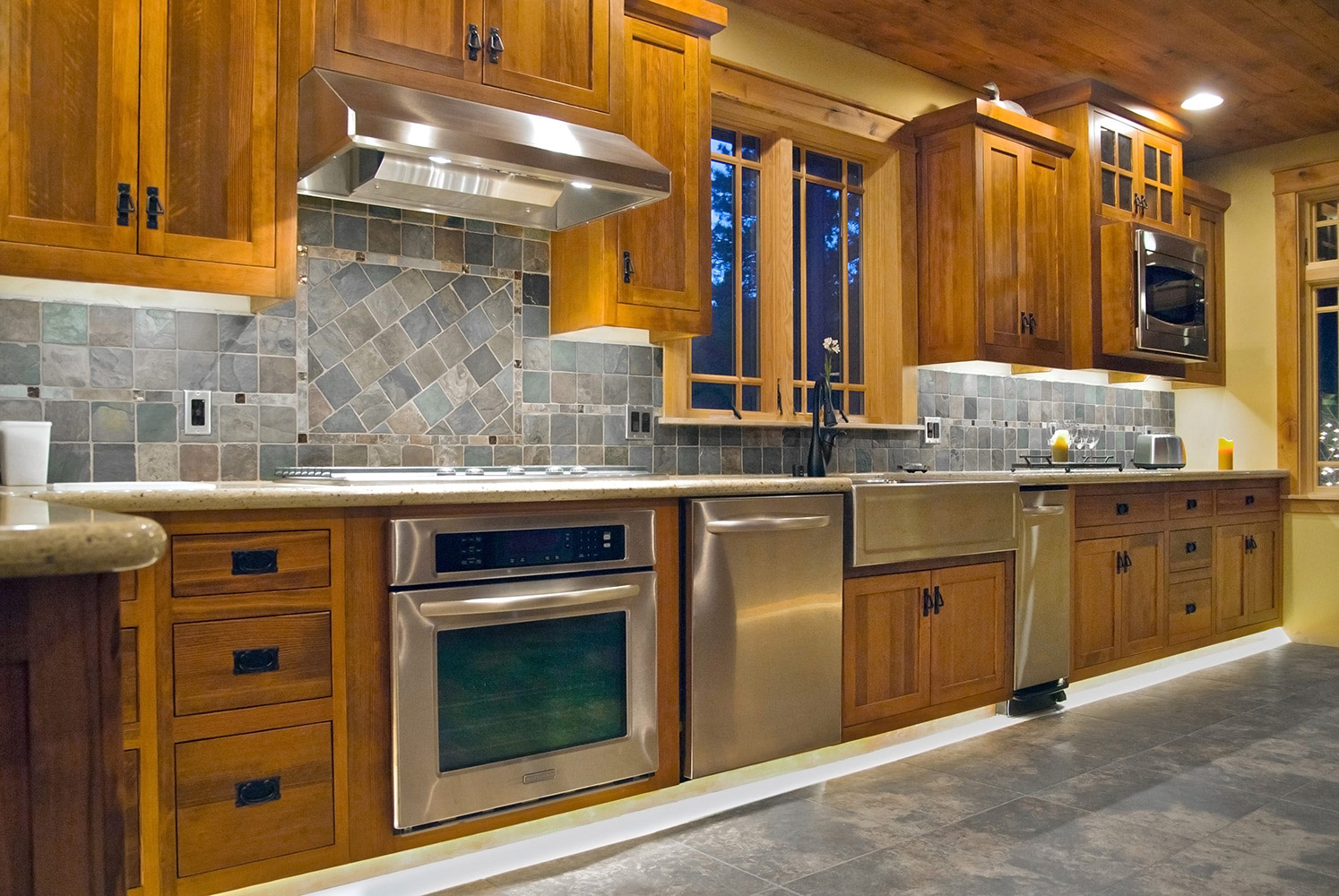
Undercabinet lighting is essential for the feel and function or a modern kitchen. It can be used for task lighting, decorative accent, or even a light glow for navigating at night without turning on the main light.

Undercabinet lighting comes in several forms. Lighting can be hard-wired or a plug-in fixture. It can be incandescent, fluorescent, or LED.

Puck lights provide a dramatic splash of light. Spacing depends on the desired effect.

Tape light gives off a bright, even glow and can often be dimmed. It can also be used above cabinet or as a toe kick to create a striking look. Dimmed, it can function as a night light.
For the adventurous homeowner, you can even get RGB LED tape that allows you to choose your own color!
Come in and talk to our lighting specialists to learn more about the options for your home!


Monday, November 16, 2015

Choose Your Technology


Part 3: Which Bulb Is For Me?

If you’re not using a dimmer, things are a bit simpler. Fluorescent and LED bulbs come in a variety of colors, represented by a number followed by the letter K. 2700K bulbs most closely resemble the light produced by an incandescent bulb. As the color moves toward 6500K, the light becomes cooler until it matches the quality of light you see outdoors at noon on a cloudless day. Both technologies last longer than incandescent bulbs: fluorescent by a few years, LED by a couple decades.

So how do you choose which to use? If you turn the light on and off frequently, you may prefer LED. Fluorescent bulb life is determined by how many times it is turned on; LED life is measured in hours. LED lights thrive in cold weather; fluorescent performance tapers off below 40⁰F. If the bulb is in a difficult to reach location or you just don’t want to worry about changing it, LED is the better option due to its longer life expectancy.

If your primary concern is budget, you may prefer fluorescent. The price of LED is dropping with every new generation of bulbs being developed, but it is currently still higher than that of fluorescent. LED uses very little energy, so when compared to other types of bulbs —which have to be replaced—over the same period of time, the total cost can be similar or even significantly less.

Both technologies have a variety of looks for their bulbs. Most CFLs are “curly” but you can also get them with a globe cover that looks more like an incandescent. There are endless looks for LED bulbs, but recent developments have allowed for some bulbs to use LED “filaments” so you can get clear or frosted bulbs that look and feel just like incandescent bulbs, but with less heat production and up to 90% energy savings!


A couple special notes about fluorescent bulbs: They do contain a small amount of mercury, so please return them to a collection point for recycling if possible. Also, if you don’t like the slight delay before a fluorescent bulb comes to full brightness, try “seasoning” it by leaving it on 3-4 hours or overnight. This gives the bulb time for its contents to distribute evenly, and should result in faster response time.

If you're still confused about bulbs, come down to our showroom! We're happy to answer questions and show you various bulbs work in person.

Sunday, November 1, 2015

Go Green With Dimmers


Part 2: Going Green With Dimmers


If you’re ready to start looking at greener technologies, your main options are fluorescent and LED bulbs. Both types of bulbs have retrofit options that allow you to swap them out directly with an incandescent bulb.

If your lamp or fixture is currently being used with a dimmer, keep it in mind while selecting your new bulb. Most fluorescent bulbs are not dimmable, and those that are require a special dimmer switch. If you use a non-dimmable fluorescent with the wrong dimmer, you could start a fire. You can read more about that here

LED bulbs will be labelled as either dimmable or non-dimmable. If your bulb is not compatible with your dimmer it may flicker, strobe, buzz, or hum. Turn it off right away to avoid damaging the bulb! If your bulb is labelled as dimmable, consult its dimmer compatibility list (most likely found online) and replace your dimmer with a model that has been tested by the manufacturer.

Next time, we’ll discuss the aspects of fluorescent and LED bulbs that will help you decide which is right for you if you don’t need to consider a dimmer.